Epicurean Lifestyle In Modern Times

What is Epicureanism?epicurus

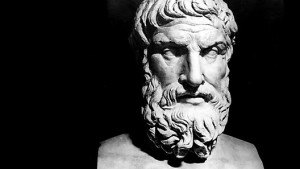
Epicureanism is a system of philosophy based upon the teachings of the ancient Greek philosopher Epicurus, founded around 307 BC. Epicurus’s philosophy combines a physics based on an atomistic materialism with a rational hedonistic ethics that emphasizes moderation of desires and cultivation of friendships. His world-view is an optimistic one that stresses that philosophy can liberate one from fears of death and the supernatural, and can teach us how to find happiness in almost any situation.

Continue reading

The Philosophy of Science

A Scientific Background  tumblr_mkacenxOHi1ralxhxo1_500

The Philosophy of Science over the last 70 decades has unearthed some fascinating information worthy of discussion and further discovery. One side says you can explain everything in the universe with reason and intellect (Quantum Mechanics), the other side says essentially it is impossible to observer reality thus all attempts to understand are frivolous (Quantum Physics). The following documentary below titled Athene’s Theory, goes beyond builds on the history of Einstein and Bohr’s famous debates. 

Continue reading

Great Thought Leader: Earl Nightingale

“We can let circumstances rule us,
or we can take charge and rule our lives from within.”

–Earl Nightingale

As a Depression-era child, Earl Nightingale was hungry for knowledge. From the time he was a young boy, he would frequent the Long Beach Public Library in California, searching for the answer to the question, “How can a person, starting from scratch, who has no particular advantage in the world, reach the goals that he feels are important to him, and by so doing, make a major contribution to others?” His desire to find an answer, coupled with his natural curiosity about the world and its workings spurred him to become one of the world’s foremost experts on success and what makes people successful.earl-nightingale1
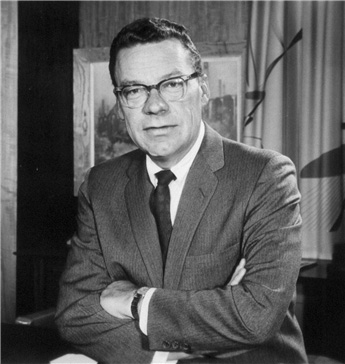
His early career began when, as a member of the Marine Corps, he volunteered to work at a local radio station as an announcer. The Marines also gave him a chance to travel, although he only got as far as Hawaii when the Japanese attacked Pearl Harbor in 1941. Earl managed to be one of the few survivors aboard the battleship Arizona. After five more years in the service, Earl and his wife moved first to Phoenix then Chicago to build what was to be a very fruitful career in network radio.

Continue reading

Great Thought Leader: Alan Watts

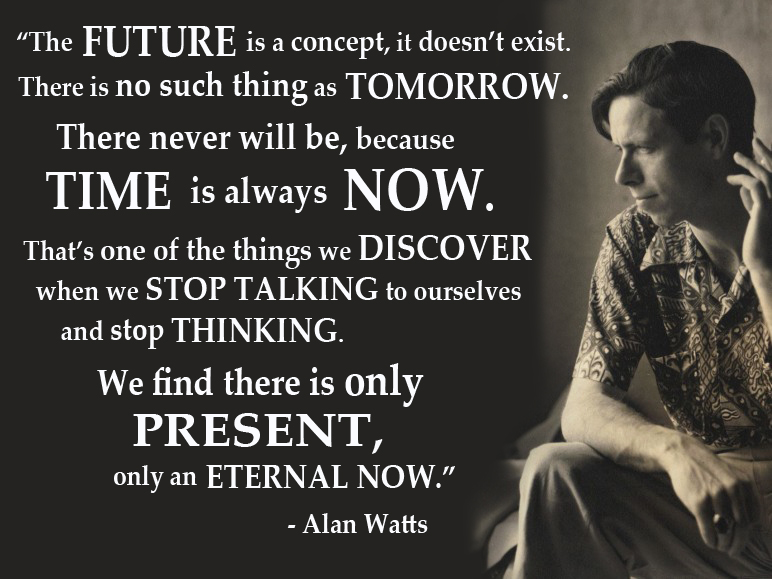
Alan Wilson Watts (6 January 1915 – 16 November 1973) was a British-born philosopher, writer, and speaker, best known as an interpreter and popularize of Eastern philosophy for a Western audience. Born in Chislehurst, he moved to the United States in 1938 and began Zen training in New York. Pursuing a career, he attended Seabury-Western Theological Seminary, where he received a master’s degree in theology. Watts became an Episcopal priest in 1945, then left the ministry in 1950 and moved to California, where he joined the faculty of the American Academy of Asian Studies.

alan-watts

Watts gained a large following in the San Francisco Bay Area while working as a volunteer programmer at KPFA, a Pacifica Radio station in Berkeley. Watts wrote more than 25 books and articles on subjects important to Eastern and Western religion, introducing the then-burgeoning youth culture to The Way of Zen (1957), one of the first bestselling books on Buddhism. In Psychotherapy East and West (1961), Watts proposed that Buddhism could be thought of as a form of psychotherapy and not a religion. He also explored human consciousness, in the essay “The New Alchemy” (1958), and in the book The Joyous Cosmology (1962).

Continue reading

Great Thought Leader: James Allen

jamesallen

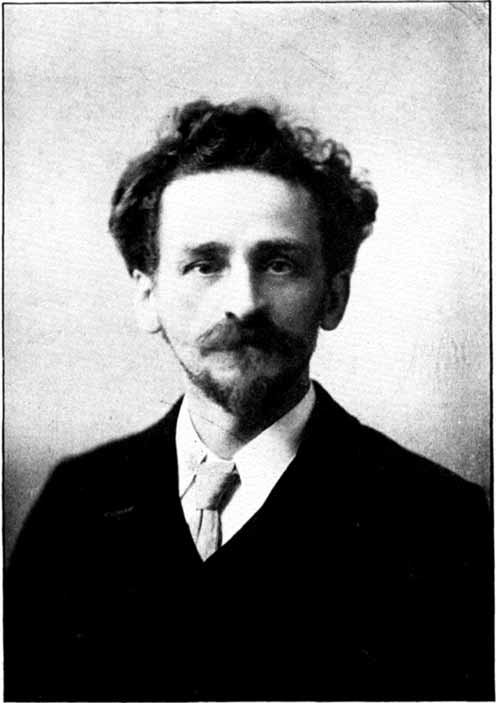
James Allen is a literary mystery man. His inspirational writings have influenced millions for good. Yet today he remains almost unknown.  None of his nineteen books give a clue to his life other than to mention his place of residence – Ilfracombe, England. His name cannot be found in a major reference work. Not even the Library of Congress or the British Museum has much to say about him. Who was this man who believed in the power of thought to bring fame, fortune and happiness? Or did he, as Henry David Thoreau says, hear a different drummer? James Allen never gained fame or fortune. That much is true. His was a quiet, unrewarded genius. He seldom made enough money from his writings to cover expenses.

Allen was born in Leicester, Central England, (November, 28, 1864). The family business failed within a few years, and in 1879 his father left for America in an effort to recoup his losses. The elder Allen had hoped to settle in the United States, but was robbed and murdered before he could send for his family. The financial crisis that resulted forced James to leave school at fifteen. He eventually became a private secretary, a position that would be called administrative assistant today. He worked in this capacity for several British manufacturers until 1902, when he decided to devote all his time to writing. Continue reading