Canadian Health Report: Intimate Partner Abuse Against Men

Introduction

Domestic abuse of women has been in the public eye for many years. Many studies have examined its nature and extent, shelters for abused women have been set up, and legislation and police charging policies have evolved in response to the growing appreciation of the extent of the problem. The extent of the comparable issue of domestic abuse of men is not as well known and understood by the general public. However, recent findings have become available that contribute to a better understanding of domestic or intimate partner abuse of men.domestic-violence-300a-090610

Statistics Canada first collected data on intimate partner abuse of both men and women through its 1999 General Social Survey (GSS). Respondents were asked 10 questions concerning abuse by their current and/or previous spouses and common-law partners during the 12-month and 5-year periods preceding the telephone interview.1 According to their responses, almost equal proportions of men and women (7% and 8% respectively) had been the victims of intimate partner physical and psychological abuse (18% and 19% respectively). These findings were consistent with several earlier studies which reported equal rates of abuse by women and men in intimate relationships.2-16

Some scholars suggest that the motives for intimate partner abuse against men by women may differ from those for abuse against women by men,17 and that women suffer more severe injuries than men.18 Nonetheless, the occurrence of abuse by women against men, and its consequences, warrant attention. It is important for the victims of abuse, whether they be men or women, to know that they are not alone –that is, that such experience is not unique to their personal situation. It is also important for the perpetrators of intimate partner abuse – men or women – to recognize that violence in any form is both morally and legally wrong.

Protecting Youth from Bullying and Cyberbullying

 May 10, 2013

Winnipeg, Manitoba – PMO Office Statment 

The Government of Canada recognizes that bullying and cyberbullying are serious concerns for many Canadian families and communities, and has reaffirmed its commitment to ensuring the safety and well-being of our most vulnerable citizens.

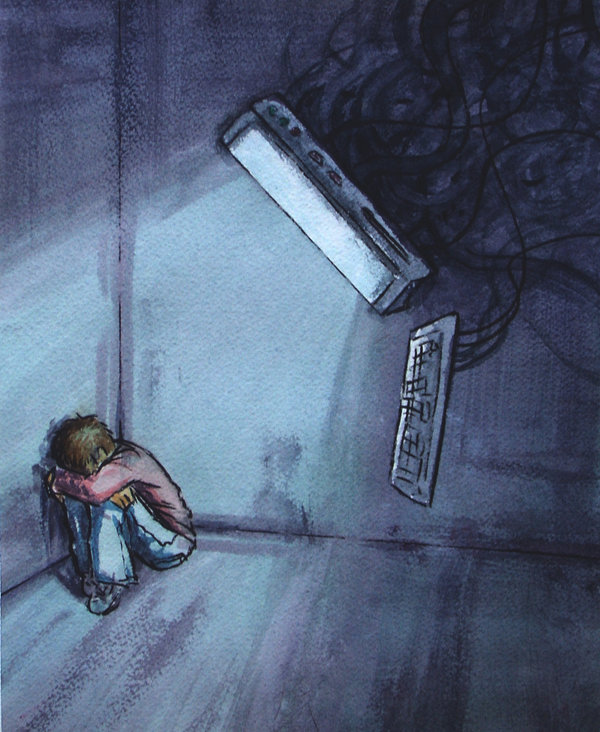
While bullying is not new, cyberbullying or bullying carried out by electronic means is a relatively recent phenomenon. Anyone can be a victim of cyberbullying. As with bullying more generally, young people are the most common targets of this type of behaviour. Bullying and cyberbullying can have a devastating impact on their victims and are particularly harmful to both the welfare and development of child victims.

Protecting our Youth

The Government has undertaken education and awareness, prevention, and, enforcement activities to address the problems of bullying and cyberbullying.

Education and Awareness

Cyber_Bullying_by_VerlVerl

  • Through the Healthy Canadians website and Facebook pages, the Government reaches out to Canadians on health issues, including information on bullying and cyberbullying, and tips for bullying prevention and intervention.
  • In February 2013, Facebook posts on bullying were seen by over 500,000 people and shared more than 6,500 times.
  • The Youth Resource Centre provides RCMP officers working in over 5,000 schools across the country with cyberbullying lesson plans to teach youth how to recognize, respond to and prevent cyberbullying behaviour.
  • Piloted in 2011, the Walk Away, Ignore, Talk it Out, Seek Help (WITS) program has RCMP officers in 50 elementary schools and has engaged over 8,800 students to prevent bullying and victimization. The program is run in collaboration with Promoting Relationships and Eliminating Violence Network (PREVNet), the Rock Solid Foundation and University of Victoria researchers.
  • The DEAL.org website is a unique by-youth, for-youth, web-based program that offers resources to youth, parents and educators on issues such as bullying and cyberbullying.
  • GetCyberSafe, the Government of Canada’s public awareness campaign on online safety, has information about cyberbullying that includes how to talk to youth about it, and how to respond to this type of incident.

PM announces changes to the Ministry

PM announces changes to the Ministry

February 22, 2013
Ottawa, Ontario

Prime Minister Stephen Harper today announced the following changes to the Ministry at a private swearing-in ceremony at Rideau Hall:

The Honourable Bernard Valcourt, as Minister of Aboriginal Affairs and Northern Development, will continue the Government’s work to advance dialogue on Aboriginal issues and take achievable steps that will provide better education and economic outcomes for Aboriginal peoples across Canada.

Continue reading

Canadian Freedom & Information Act

Access To Information Act 

Click Here to download the Act. 

Purpose 2. (1) The purpose of this Act is to extend the present laws of Canada to provide a right of access to information in records under the control of a government institution in accordance with the principles that government information
should be available to the public, that necessary exceptions to the right of access should be limited and specific and that decisions on the disclosure of government information should be reviewed independently of government.

Former SNC-Lavalin CEO

pierre_duhaime.jpg.size.xxlarge.letterbox

Graham Hughes / THE CANADIAN PRESS
Pierre Duhaime leaves SQ headquarters in Montreal on Wednesday, November 28, 2012. THE CANADIAN PRESS/Graham Hughes.

By: The Canadian Press, Published on Mon Feb 11 2013

MONTREAL—Pierre Duhaime, the former chief executive of Canada’s biggest engineering firm, has been granted more flexibility to travel within the country pending trial on fraud charges.

Duhaime, a prominent Quebec businessman and once the head of engineering powerhouse SNC-Lavalin, was formally charged with fraud on Monday. He was not in the courtroom as his lawyer, Michel Massicotte, pleaded not guilty on his behalf. A change was made to conditions surrounding Duhaime’s release. Initially, he was forbidden from leaving Quebec. The Crown has now agreed he can travel elsewhere in Canada — but not go beyond its borders.

Read more via @TorontoStar

 This information and content is the  property of  the Toronto Star.

The Safe Streets and Communities Act

Conservatives Noted Key Accomplishments

February 8, 2013
Vancouver, British Columbia

The Government of Canada has made significant accomplishments in three key areas: tackling crime by holding violent criminals accountable for their crimes, giving victims of crime a stronger voice, and increasing the efficiency of the Justice system. In total, over thirty measures have been enacted into law since 2006.

TACKLING CRIME

The Ending House Arrest for Property and Other Serious Crimes component of the Safe Streets and Communities Act (Bill C-10) (Effective date: November 20, 2012)

These amendments restricted the use of conditional sentences including house arrests. A conditional sentence is a sentence of imprisonment that may be served in the community provided certain conditions are met. The amendments provided an expanded and clear list of offences for which conditional sentences are not available.

The Targeting Serious Drug Crime component of the Safe Streets and Communities Act (Bill C-10) 7c936057-6e80-4504-8a79-4d53605cd277(Effective date: November 6, 2012)

The Safe Streets and Communities Act amended the Controlled Drugs and Substances Act (CDSA) to address serious organized drug crime. The CDSA now provides mandatory minimum penalties for serious drug offences, including those carried out for organized crime purposes and those that involve targeting youth. The legislation supported the National Anti-Drug Strategy’s efforts to combat illicit drug production and distribution and help disrupt criminal enterprises by targeting drug suppliers.

The Protecting Canadians from Violent and Repeat Young Offenders component of the Safe Streets and Communities Act (Bill C-10) (Effective date: October 23, 2012)

The Safe Streets and Communities Act included reforms designed to help ensure that violent and repeat young offenders are held fully accountable, and that the protection of society is given due consideration in applying the Youth Criminal Justice Act.

The Protecting Children from Sexual Predators component of the Safe Streets and Communities Act (Bill C-10) (Effective date: August 9, 2012)

The Safe Streets and Communities Act amended the Criminal Code to better protect children from sexual predators by ensuring that the penalties imposed for sexual offences against children are consistent and better reflect the heinous nature of these acts, and by creating two new offences that take aim at conduct that could facilitate the sexual abuse of a child.

Continue reading

Bill 115, Putting Students First Act, 2012

Thoughts On Fight Bill 115 Marketing 

“Teachers, the people who warm our hearts and give us the gift of knowledge.” 

I finally found the time to really dig deep and look over Bill 115  after seeing the Ontario Secondary Schools Teacher Federation(OSSTF)  FighBill115.ca  Ad all over the internet. The conclusion I come to is this, the content of the bill is very strong in reason and rationality and it should be passed and accepted by the teachers this one time. Given the hard fiscal position Ontario is currently in the OSSTF marketing campaign has alienated the valid concerns some teachers actually have with Bill 115. It is overwhelming agreed within society that we need to protect our teachers, and make sure that they are cared for. However it is more important to protect the young minds of the children first.  

I don’t think the Ad campaign FightBill115 has been effective and clear with its message on why parents should side with the union vs. the Liberal government that was just re-elected a year ago. This campaign shows the OSSTF blatant position that it is holding children’s lives and extracurricular activities hostage it is an unnecessary aggressive ad campaign.

 [youtube_sc url=”http://www.youtube.com/watch?v=hT602yPSozU”]

Continue reading

64th Senate Committee on Aborginal Peoples

Senate of Canada Committee on Aboriginal Peoples.

Serving as the Federal Government Liaison for the Eastern Woodlands Metis Nova Scotia. Doing my best to help support our most vulnerable.

“Our mission with the Eastern Woodland Métis Nation is to promote and preserve the Metis identity and heritage in our community.  We strive to promote education, training, business opportunities, leadership, health and justice.  Our goal is to be economically sustainable and self‑reliant.  Our values of the ultimate authority of the Eastern Woodland Métis Nation reside with its membership.  A consensus is sought from the grassroots membership and is ensured by organizational structures that take into account traditional values that our ancestors have given to us with the belief that the whole community and not just one individual group is to be represented.  Our vision is to be self‑actualized, as laid out in the Royal Commission Report on Aboriginal Peoples” 

Unrevised Transcript, December 5th, 2012 : Senate of Canada Committee on Aboriginal People.


Economic Independence and The Idea of Self Determination

In my personal opinion and experience even still today here in Canada, I find most police officers or “peace officers” still use excessive tactics of intimidation and force. I think this alienates the core rights and freedoms that are supposed to be protected under the law. 

I fundamentally believe individual human rights and freedoms are worth fighting to protect, and even though institutional racism is a reality I choose NOT to turn a blind eye but instead work towards a modern solution that focuses on the self, because the system will not do it for us.

Continue reading