Rules for Dealing with Police

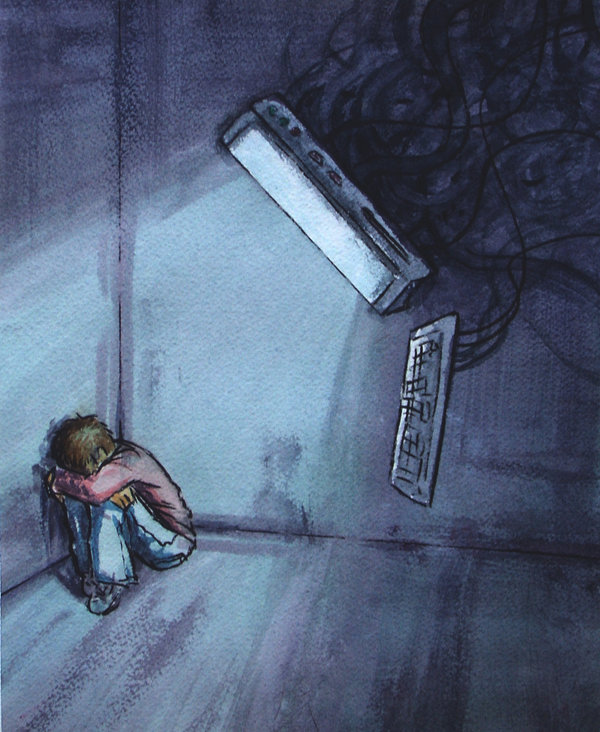
Billy Murphy talks about how to deal with the police. He’s been a judge, but he’s best known as a criminal defence lawyer. He knows how the law works and he knows that for many people the law sometimes doesn’t work. He’s going to show you how to make the law work for you. The choices you make can have a massive impact in the outcomes of your police encounters, even if, and especially if, you’ve done nothing wrong.section-10a

There are lots of good police officers out there doing what needs to be done and there are also few too many cops who don’t respect the basic rights of innocent people. But you don’t get to chose who you’re dealing with. And even the nicest cop will use your mistakes against you. That’s precisely why every citizen must possess the tools to confidently assert their rights if they have to. Continue reading

Canadian Health Report: Intimate Partner Abuse Against Men

Introduction

Domestic abuse of women has been in the public eye for many years. Many studies have examined its nature and extent, shelters for abused women have been set up, and legislation and police charging policies have evolved in response to the growing appreciation of the extent of the problem. The extent of the comparable issue of domestic abuse of men is not as well known and understood by the general public. However, recent findings have become available that contribute to a better understanding of domestic or intimate partner abuse of men.domestic-violence-300a-090610

Statistics Canada first collected data on intimate partner abuse of both men and women through its 1999 General Social Survey (GSS). Respondents were asked 10 questions concerning abuse by their current and/or previous spouses and common-law partners during the 12-month and 5-year periods preceding the telephone interview.1 According to their responses, almost equal proportions of men and women (7% and 8% respectively) had been the victims of intimate partner physical and psychological abuse (18% and 19% respectively). These findings were consistent with several earlier studies which reported equal rates of abuse by women and men in intimate relationships.2-16

Some scholars suggest that the motives for intimate partner abuse against men by women may differ from those for abuse against women by men,17 and that women suffer more severe injuries than men.18 Nonetheless, the occurrence of abuse by women against men, and its consequences, warrant attention. It is important for the victims of abuse, whether they be men or women, to know that they are not alone –that is, that such experience is not unique to their personal situation. It is also important for the perpetrators of intimate partner abuse – men or women – to recognize that violence in any form is both morally and legally wrong.

Continue reading

UNEQUAL ACCESS: A Canadian Profile of Racial Differences in Education, Employment and Income.

This research was funded by the Canadian Race Relations Foundation. This report is a summary of the major results obtain from Unequal Access: A Canadian Profile of Racial Differences in Education, Employment and Income. The Highlights document provides statistical data in the form of graphs- from the 1996- comparing employment, income and university education rates according to racial groups. As well, the summary presents racialise peoples difficulties in obtain employment related to their field of study or expertise, as well as having recognition of their foreign earned education. Copies of this bilingual report are availalbe through the CRRF. via http://www.crr.ca/

Top Documentary of The Week: America Before Columbus

America Before Columbus

History books traditionally depict the pre-Columbus Americas as a pristine wilderness where small native villages lived in harmony with nature.

But scientific evidence tells a very different story: When Columbus stepped ashore in 1492, millions of people were already living there. America wasn’t exactly a New World, but a very old one whose inhabitants had built a vast infrastructure of cities, orchards, canals and causeways. The English brought honeybees to the Americas for honey, but the bees pollinated orchards along the East Coast. Thanks to the feral honeybees, many of the plants the 

columbus_1772950bEuropeans brought, like apples and peaches, proliferated. Some 12,000 years ago, North American mammoths, ancient horses, and other large mammals vanished. The first horses in America since the Pleistocene era arrived with Columbus in 1493.

Settlers in the Americas told of rivers that had more fish than water. The South American potato helped spark a population explosion in Europe. In 1491, the Americas had few domesticated animals, and used the llama as their beast of burden.

In 1491, more people lived in the Americas than in Europe. The first conquistadors were sailors and adventurers. In 1492, the Americas were not a pristine wilderness but a crowded and managed landscape. The now barren Chaco Canyon was once covered with vegetation. Along with crops like wheat, weeds like dandelion were brought to America by Europeans.

Continue reading

Protecting Youth from Bullying and Cyberbullying

 May 10, 2013

Winnipeg, Manitoba – PMO Office Statment 

The Government of Canada recognizes that bullying and cyberbullying are serious concerns for many Canadian families and communities, and has reaffirmed its commitment to ensuring the safety and well-being of our most vulnerable citizens.

While bullying is not new, cyberbullying or bullying carried out by electronic means is a relatively recent phenomenon. Anyone can be a victim of cyberbullying. As with bullying more generally, young people are the most common targets of this type of behaviour. Bullying and cyberbullying can have a devastating impact on their victims and are particularly harmful to both the welfare and development of child victims.

Protecting our Youth

The Government has undertaken education and awareness, prevention, and, enforcement activities to address the problems of bullying and cyberbullying.

Education and Awareness

Cyber_Bullying_by_VerlVerl

  • Through the Healthy Canadians website and Facebook pages, the Government reaches out to Canadians on health issues, including information on bullying and cyberbullying, and tips for bullying prevention and intervention.
  • In February 2013, Facebook posts on bullying were seen by over 500,000 people and shared more than 6,500 times.
  • The Youth Resource Centre provides RCMP officers working in over 5,000 schools across the country with cyberbullying lesson plans to teach youth how to recognize, respond to and prevent cyberbullying behaviour.
  • Piloted in 2011, the Walk Away, Ignore, Talk it Out, Seek Help (WITS) program has RCMP officers in 50 elementary schools and has engaged over 8,800 students to prevent bullying and victimization. The program is run in collaboration with Promoting Relationships and Eliminating Violence Network (PREVNet), the Rock Solid Foundation and University of Victoria researchers.
  • The DEAL.org website is a unique by-youth, for-youth, web-based program that offers resources to youth, parents and educators on issues such as bullying and cyberbullying.
  • GetCyberSafe, the Government of Canada’s public awareness campaign on online safety, has information about cyberbullying that includes how to talk to youth about it, and how to respond to this type of incident.
  • Continue reading

A Prayer for Mercy In Time of Trouble

By: Jerome Downey

Positive Impacts of Religious Awareness

After talking to my 76 year old grandmother I was inspired to share a bible verse she recited to me after we discussed the challenging week it has been in the news regarding the loss of life and violence which has transpired. I don’t attend church as regularly as I once did in my youth however as I grow older I have become more aware of the positive impacts religion has played in my life.

Within the African Nova Scotian culture there is a strong connection to the church within the community. The African United Baptist Association (AUBA) was founded in Nova Scotia and has been in existence since 1818. Drawing from this history and understanding of my culture I personally identify with a lot of traditional Southern Black Gospel music, it has an empowering emotional and strong impact on the listener. This is one of my favourite Gospel genre songs these days I hope you enjoy!

[youtube_sc url=”http://www.youtube.com/watch?v=JY8dIRbhIug” title=”A%20Prayer%20for%20Mercy%20In%20Time%20of%20Trouble%20″]

Continue reading

Royal Bank Takes Social Finance Leadership

By: JeromeDowney

Recently the Royal Bank of Canada (RBC) suffered a public relations setback with the announcements of the outsourcing of  jobs within the banks internal administrative IT division. This type of negative media focus has been prevalent since the 2008 financial crisis for many banks. With record job losses, home foreclosures and the rise of predatory B lending capital there has been no shortage of material for public’s scrutiny. However with that said positive solutions must come out of this financial crisis one way or another. And that is where the concept of social finance as a new financial tool of lending capital has an opportunity to succeed.

rbc-web

A Royal Bank of Canada (RBC) logo is seen at a branch in Toronto. (© Mark Blinch / Reuters/Mark Blinch /REUTERS)

Finance As a Tool of Equity and Growth

The financial service sector has always been an engine of economic growth for North America’s economy. The development of different financial instruments, products, services and credit approval criteria has revolutionized how money is exchanged between consumers and merchants. In Canada our finances have become increasingly digitized. We have online banking, secured/unsecured credit cards, and simple debt cards. We have online equity trading platforms and a verity of other tools that enables the economic flow of capital. However there has been little development on the technology of lending criteria. The big question social finance can help us answer is “How do we value the human element of capital”?

Continue reading

Ottawa City’s First Greenhouse Gas (GHG) Roundtable

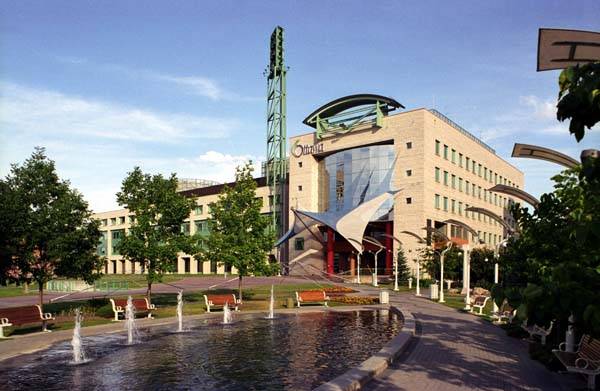
Ottawa – The City will be hosting its first ever Greenhouse Gas (GHG) Roundtable on Saturday, March 23, 2013. Predicted to be a day of engaging discussion, response to the event has been extremely positive, with registration filling up within a week of its announcement. The morning will feature presentations by well-known and respected panellists who will provide an update on the state of the issue, with a focus on both policies and programs that are being implemented to address climate change issues. The presentations will be followed by an open mic exchange between panellists and participants. The morning session will be webcast to give all residents an opportunity to share in the discussion.

“Climate change is a significant and well-documented phenomenon,” said Mayor Jim Watson. “Working with our residents and both levels of Government, the City of Ottawa will continue the challenging task of reducing the long-term, harmful effect of GHGs on our climate and the environment.”

Ottawa_courtesy_city_of_ottawa

City Council committed to hosting the Roundtable when the results of its 2004 and 2008 GHG inventory were received. This event supports the City’s commitment to producing a renewed and integrated Climate Change Plan for Ottawa that will build on the important work currently underway with the Official Plan, Transportation and Infrastructure Master Plan updates.  These, combined with the reporting of the 2012 GHG inventory, will set the stage for delivery of a comprehensive Air Quality and Climate Change Management Plan for Ottawa to be completed in the first half of 2014.

Continue reading

Government working with Heart and Stroke Foundation of Canada

PM Harper aannounces support for defibrillators in community hockey arenas

February 21, 2013
Saskatoon, Saskatchewan

Prime Minister Stephen Harper today announced that the Government of Canada is working with the Heart and Stroke Foundation of Canada (HSFC) to put in place Automated External Defibrillators (AEDs) and related training in community hockey arenas across the country in order to help save lives.

ABOTXEUE


“Our Government is committed to protecting the health and safety of Canadians while encouraging active and healthy lifestyles,” said the Prime Minister. “We are proud to work with the Heart and Stroke Foundation of Canada and its partners to provide defibrillators and trained personnel to use them at community arenas across the country.”

Continue reading

African Canadian Hero: Nova Scotia

Downey Politics-3


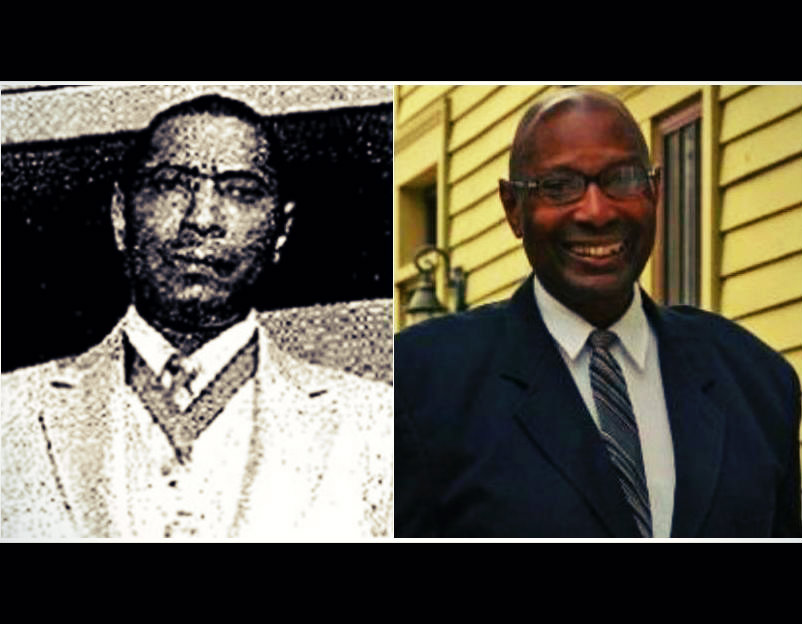
A Black History Month Tribute to My Grandfather Graham Leo. Downey

Transcending The Racial Divide

My grandfather Graham Leo Downey is part of a family that included seven brothers, three sisters and a foster sister. He was born in Halifax in 1939 to George Alexander Downey and Leotra (Tomlinson).  He attended Joseph Howe Elementary School, and he considers himself a graduate of the “school of hard knocks”.

Continue reading