Napoleon Hill – Think And Grow Rich

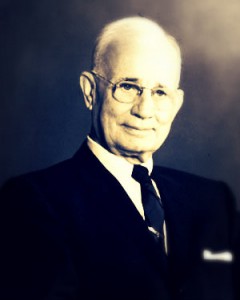
I had a meeting in Ottawa, ON with my mentor and fellow Mount Allison Alumni Isaac Goodine a few months ago, halfway into our conversation he in-trusted and handed me his personal copy of a book called Think and Grow Rich written by Napoleon Hill originally published in 1937. The copy in my hand was a 30th anniversary edition that was re-published in 1967. The book was in frail condition but well intact and over the next few weeks I would begin to learn more about this amazing person who helped inspire a generation to live with more  purpose and conviction in their life.  

Napoleon-Hill-Old-12

Napoleon Hill in Later Years.

Continue reading

We Become, What We Think.

This was a random and  inspired post that was driven by a need to share a positive message. Messages of floods, criminal activities, political mischief  etc. I find these constant negative messages drain my energy, and through a verity of  mediums, Twitter, Facebook, Google Search, On-line News Publications, not to mention old fashion Television. I figured this could be a nice  switch up and so I created this post . The production and visual content is not the most amazing, however the content and message is more than worthy of a listen.

thoughts

Continue reading

Analytica Advisors: Open Letter Canadian Cleantech Sector

Dear Jerome,

Last week the Globe and Mail reported that Mark Carney, in his final speech as Governor of the Bank of Canada, said that faster economic growth will depend on business investment and export growth. He stated that exports should be $130 billion higher now if the trajectory of previous recessions is a guide, and that the central bank expects business investment to remain below average.investment to remain below average.

CleanTech

In the previous Spotlight on Cleantech we discussed the contributions of small and medium-sized enterprises to  as was the case before the disappearance of liquidity during the global financial crisis and the loss of more than 10 years of export gains by SMEs, including rising exports during the appreciation of the Canadian dollar starting in 2003.Canada’s exports. Canadian SMEs have proven that they can deliver $84 billion on non-resources exports annually [i]

Canadian clean technology companies are accomplished exporters, with 48% of industry revenues being derived from exports and 44% of these exports being to countries other than the US.  Estimated exports for the clean technology industry were $5.2 billion in 2011, approximately 9% of 2010 SME non-resources-related exports. We forecast that the industry will deliver between $10.6 and $17.5 billion in exports by 2015, a doubling or tripling of 2011 exports. Continue reading

Rules for Dealing with Police

Billy Murphy talks about how to deal with the police. He’s been a judge, but he’s best known as a criminal defence lawyer. He knows how the law works and he knows that for many people the law sometimes doesn’t work. He’s going to show you how to make the law work for you. The choices you make can have a massive impact in the outcomes of your police encounters, even if, and especially if, you’ve done nothing wrong.section-10a

There are lots of good police officers out there doing what needs to be done and there are also few too many cops who don’t respect the basic rights of innocent people. But you don’t get to chose who you’re dealing with. And even the nicest cop will use your mistakes against you. That’s precisely why every citizen must possess the tools to confidently assert their rights if they have to. Continue reading

Canadian Health Report: Intimate Partner Abuse Against Men

Introduction

Domestic abuse of women has been in the public eye for many years. Many studies have examined its nature and extent, shelters for abused women have been set up, and legislation and police charging policies have evolved in response to the growing appreciation of the extent of the problem. The extent of the comparable issue of domestic abuse of men is not as well known and understood by the general public. However, recent findings have become available that contribute to a better understanding of domestic or intimate partner abuse of men.domestic-violence-300a-090610

Statistics Canada first collected data on intimate partner abuse of both men and women through its 1999 General Social Survey (GSS). Respondents were asked 10 questions concerning abuse by their current and/or previous spouses and common-law partners during the 12-month and 5-year periods preceding the telephone interview.1 According to their responses, almost equal proportions of men and women (7% and 8% respectively) had been the victims of intimate partner physical and psychological abuse (18% and 19% respectively). These findings were consistent with several earlier studies which reported equal rates of abuse by women and men in intimate relationships.2-16

Some scholars suggest that the motives for intimate partner abuse against men by women may differ from those for abuse against women by men,17 and that women suffer more severe injuries than men.18 Nonetheless, the occurrence of abuse by women against men, and its consequences, warrant attention. It is important for the victims of abuse, whether they be men or women, to know that they are not alone –that is, that such experience is not unique to their personal situation. It is also important for the perpetrators of intimate partner abuse – men or women – to recognize that violence in any form is both morally and legally wrong.

Continue reading

UNEQUAL ACCESS: A Canadian Profile of Racial Differences in Education, Employment and Income.

This research was funded by the Canadian Race Relations Foundation. This report is a summary of the major results obtain from Unequal Access: A Canadian Profile of Racial Differences in Education, Employment and Income. The Highlights document provides statistical data in the form of graphs- from the 1996- comparing employment, income and university education rates according to racial groups. As well, the summary presents racialise peoples difficulties in obtain employment related to their field of study or expertise, as well as having recognition of their foreign earned education. Copies of this bilingual report are availalbe through the CRRF. via http://www.crr.ca/

Top Documentary of The Week: America Before Columbus

America Before Columbus

History books traditionally depict the pre-Columbus Americas as a pristine wilderness where small native villages lived in harmony with nature.

But scientific evidence tells a very different story: When Columbus stepped ashore in 1492, millions of people were already living there. America wasn’t exactly a New World, but a very old one whose inhabitants had built a vast infrastructure of cities, orchards, canals and causeways. The English brought honeybees to the Americas for honey, but the bees pollinated orchards along the East Coast. Thanks to the feral honeybees, many of the plants the 

columbus_1772950bEuropeans brought, like apples and peaches, proliferated. Some 12,000 years ago, North American mammoths, ancient horses, and other large mammals vanished. The first horses in America since the Pleistocene era arrived with Columbus in 1493.

Settlers in the Americas told of rivers that had more fish than water. The South American potato helped spark a population explosion in Europe. In 1491, the Americas had few domesticated animals, and used the llama as their beast of burden.

In 1491, more people lived in the Americas than in Europe. The first conquistadors were sailors and adventurers. In 1492, the Americas were not a pristine wilderness but a crowded and managed landscape. The now barren Chaco Canyon was once covered with vegetation. Along with crops like wheat, weeds like dandelion were brought to America by Europeans.

Continue reading

Protecting Youth from Bullying and Cyberbullying

 May 10, 2013

Winnipeg, Manitoba – PMO Office Statment 

The Government of Canada recognizes that bullying and cyberbullying are serious concerns for many Canadian families and communities, and has reaffirmed its commitment to ensuring the safety and well-being of our most vulnerable citizens.

While bullying is not new, cyberbullying or bullying carried out by electronic means is a relatively recent phenomenon. Anyone can be a victim of cyberbullying. As with bullying more generally, young people are the most common targets of this type of behaviour. Bullying and cyberbullying can have a devastating impact on their victims and are particularly harmful to both the welfare and development of child victims.

Protecting our Youth

The Government has undertaken education and awareness, prevention, and, enforcement activities to address the problems of bullying and cyberbullying.

Education and Awareness

Cyber_Bullying_by_VerlVerl

  • Through the Healthy Canadians website and Facebook pages, the Government reaches out to Canadians on health issues, including information on bullying and cyberbullying, and tips for bullying prevention and intervention.
  • In February 2013, Facebook posts on bullying were seen by over 500,000 people and shared more than 6,500 times.
  • The Youth Resource Centre provides RCMP officers working in over 5,000 schools across the country with cyberbullying lesson plans to teach youth how to recognize, respond to and prevent cyberbullying behaviour.
  • Piloted in 2011, the Walk Away, Ignore, Talk it Out, Seek Help (WITS) program has RCMP officers in 50 elementary schools and has engaged over 8,800 students to prevent bullying and victimization. The program is run in collaboration with Promoting Relationships and Eliminating Violence Network (PREVNet), the Rock Solid Foundation and University of Victoria researchers.
  • The DEAL.org website is a unique by-youth, for-youth, web-based program that offers resources to youth, parents and educators on issues such as bullying and cyberbullying.
  • GetCyberSafe, the Government of Canada’s public awareness campaign on online safety, has information about cyberbullying that includes how to talk to youth about it, and how to respond to this type of incident.
  • Continue reading

Canadian Radio-Television and Telecommunications Commission

About the CRTC

telecom_sector

  • The Canadian Radio-television and Telecommunications Commission (CRTC) is an independent public organization that regulates and supervises the Canadian Radio, Television and Telecommunications sector. 
  • The CRTC does NOT regulate newspapers, magazines, cell phone rates, the quality of service and business practices of cell phone companies, or the quality and content of TV and radio programs.broadcasting and telecommunications systems.
  • As an independent organization, the CRTC works to serve the needs and interests of citizens, industries, interest groups and the government.
  • The CRTC reports to Parliament through the Minister of Canadian Heritage.

Mandate

The CRTC’s mandate is to ensure that both the broadcasting and telecommunications systems serve the Canadian public. The CRTC uses the objectives in the Broadcasting Act and the Telecommunications Act to guide its policy decisions.

Continue reading

Harper announces energy innovation projects across Canada

May 3, 2013
Quebec City, Quebec

dpsezozwugw9xokum95y

Click the logo to read the press release from CO2 Solutions

Prime Minister Stephen Harper today announced support for 55 innovative new projects aimed at producing and using energy in a cleaner, more efficient way. Support is being provided through the Government of Canada’s ecoENERGY Innovation Initiative, which was introduced in Budget 2011, and is being led by Natural Resources Canada. The Prime Minister was joined by Christian Paradis, Minister of Industry and Minister of State (Agriculture), and Steven Blaney, Minister of Veteran Affairs and Minister for La Francophonie. 

“Our Government is positioning Canada as a global leader in the clean energy sector by supporting innovative projects across the country aimed at producing and using energy in a cleaner and more efficient way,” said the Prime Minister. “The research and development generated by the projects being announced today will also maintain and create jobs, while benefitting the environment.” 

Continue reading